
12,000+ PLAYERS · 52 COUNTRIES · PLAYER DEVELOPMENT SINCE 2012
AD
PLAYER DEVELOPMENT · PERFORMANCE UNDER PRESSURE
7 Reasons Good Players Suddenly Look Different When Competition Starts
If your player looks confident and decisive in training, then hesitates, goes quiet or plays safe in competition, there may be more going on than confidence. Researchers have spent years looking at what changes when players perform under pressure. These seven reasons help explain some of what might be going on.
Based on research into pressure, attention and performance in sport.

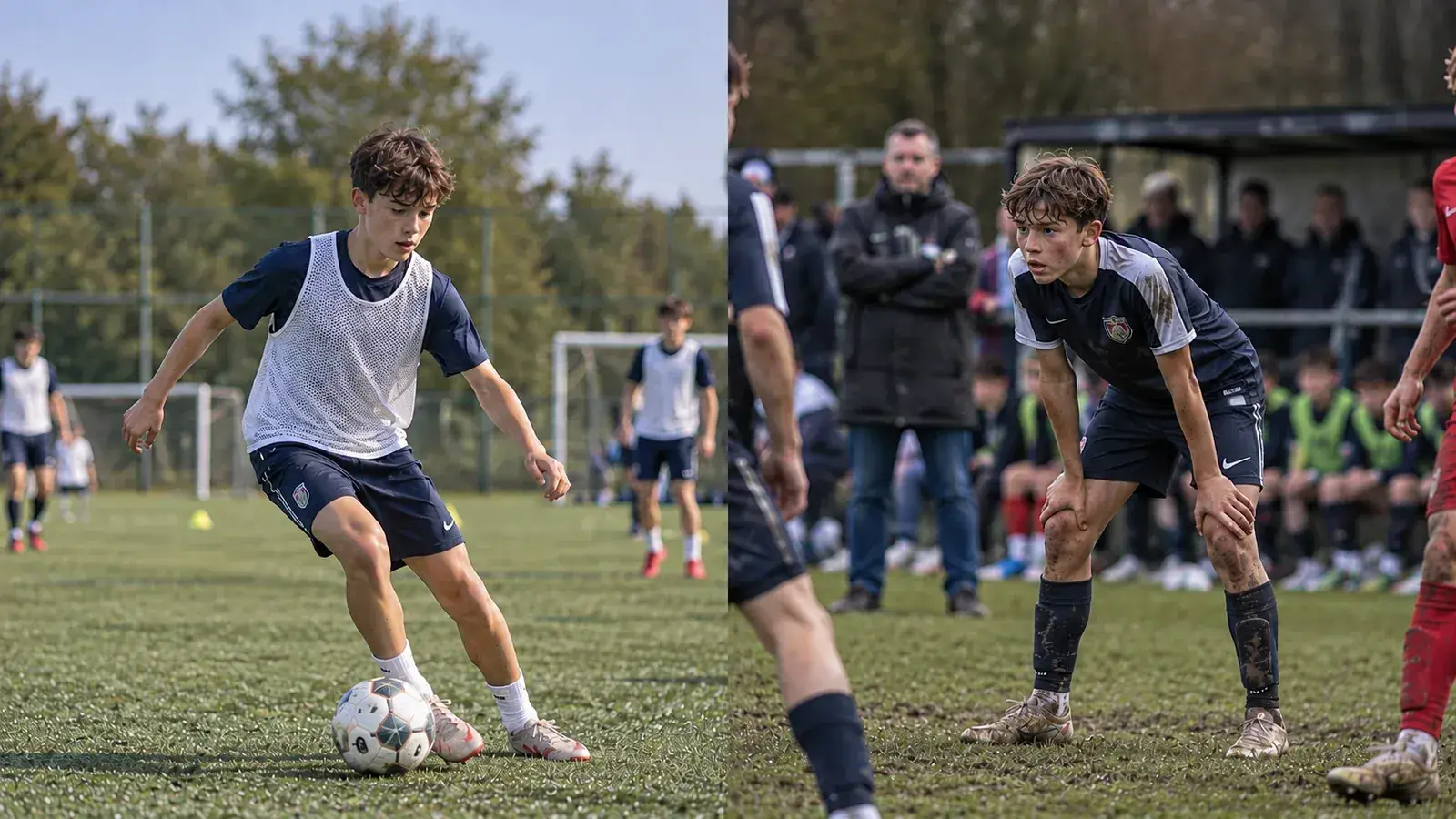
What changes under pressure?
Your player hasn’t suddenly lost their ability
You’ve seen what they can do in training.
Then competition starts, the game feels bigger, and suddenly they hesitate, play safe or stop doing things that normally come naturally.
Research shows that pressure can make it harder to perform skills a player already has. Attention is one of the most studied reasons. Instead of simply reading the game, part of their mind can get pulled towards the score, the coach, a mistake or what might happen next.
That’s why telling them to “just be confident” doesn’t always fix it.
01
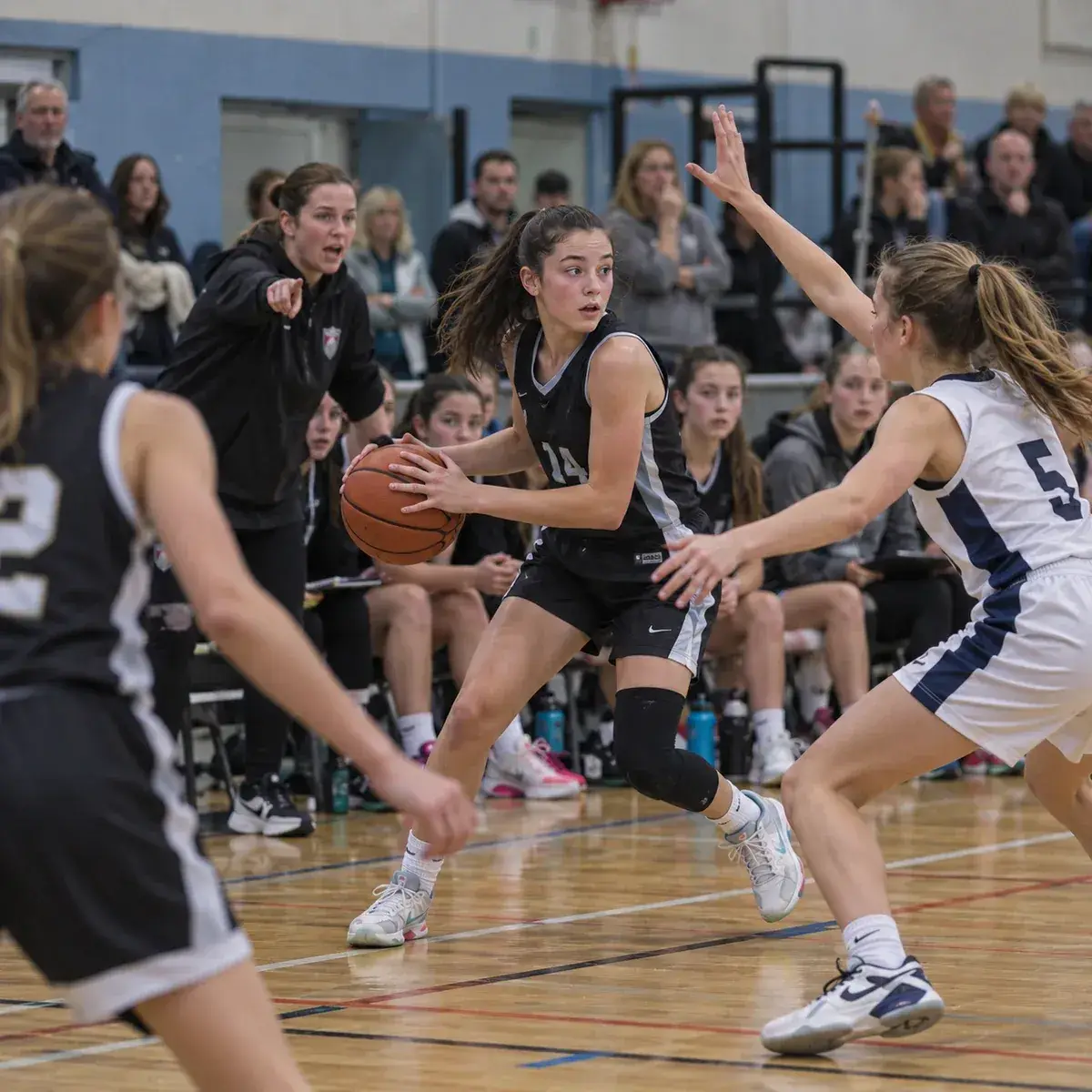
Match day changes what the moment means
In training, a mistake might just mean the pass didn’t come off, the shot missed or they made the wrong decision. There’s usually another rep, another drill or another chance a few seconds later.
Competition can feel different. Now there’s a score, a coach watching and teammates relying on them. Maybe parents are on the side. Maybe they’ve already made one mistake and really don’t want another. All of those things can make getting it right feel more important.
The skill itself hasn’t necessarily changed. What has changed is the situation around it. And when getting it right starts to feel more important, the same skill can suddenly feel harder to perform.
02
Pressure can pull their attention away from the game
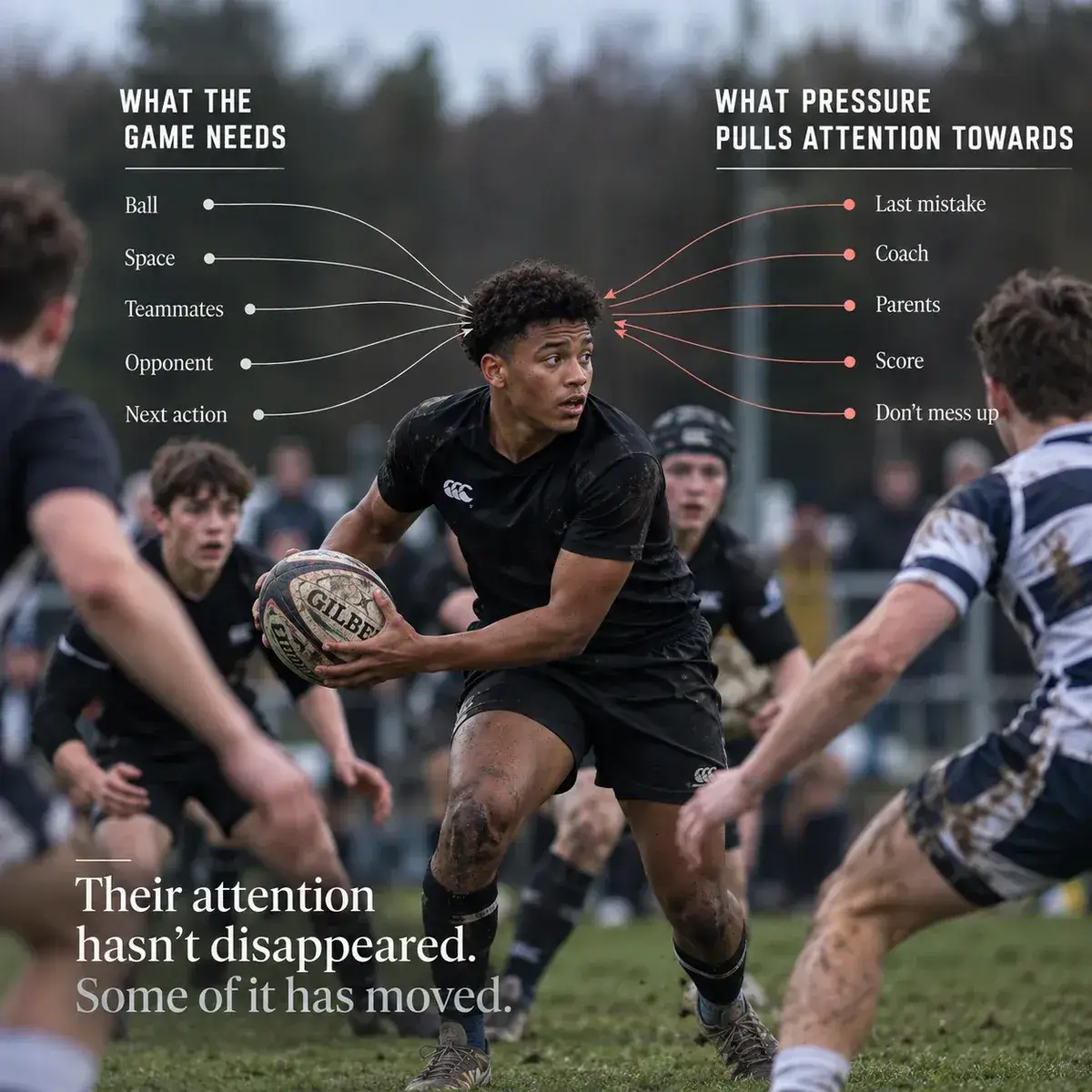
This is one of the biggest things parents miss. Your player can still know exactly what to do, but part of their attention may now be somewhere else.
It might be the mistake they just made, the coach, the score, what people are thinking or what happens if they get it wrong again.
Researchers who study pressure have looked at this a lot. Put simply, some of the attention a player needs for what’s happening now can get pulled towards things that aren’t helping with the next action.
It doesn’t look the same in every player. Some get pulled towards the score or the coach. Others start paying more attention to their own movement, which is the next reason.
03
Trying harder can sometimes make them overthink the skill
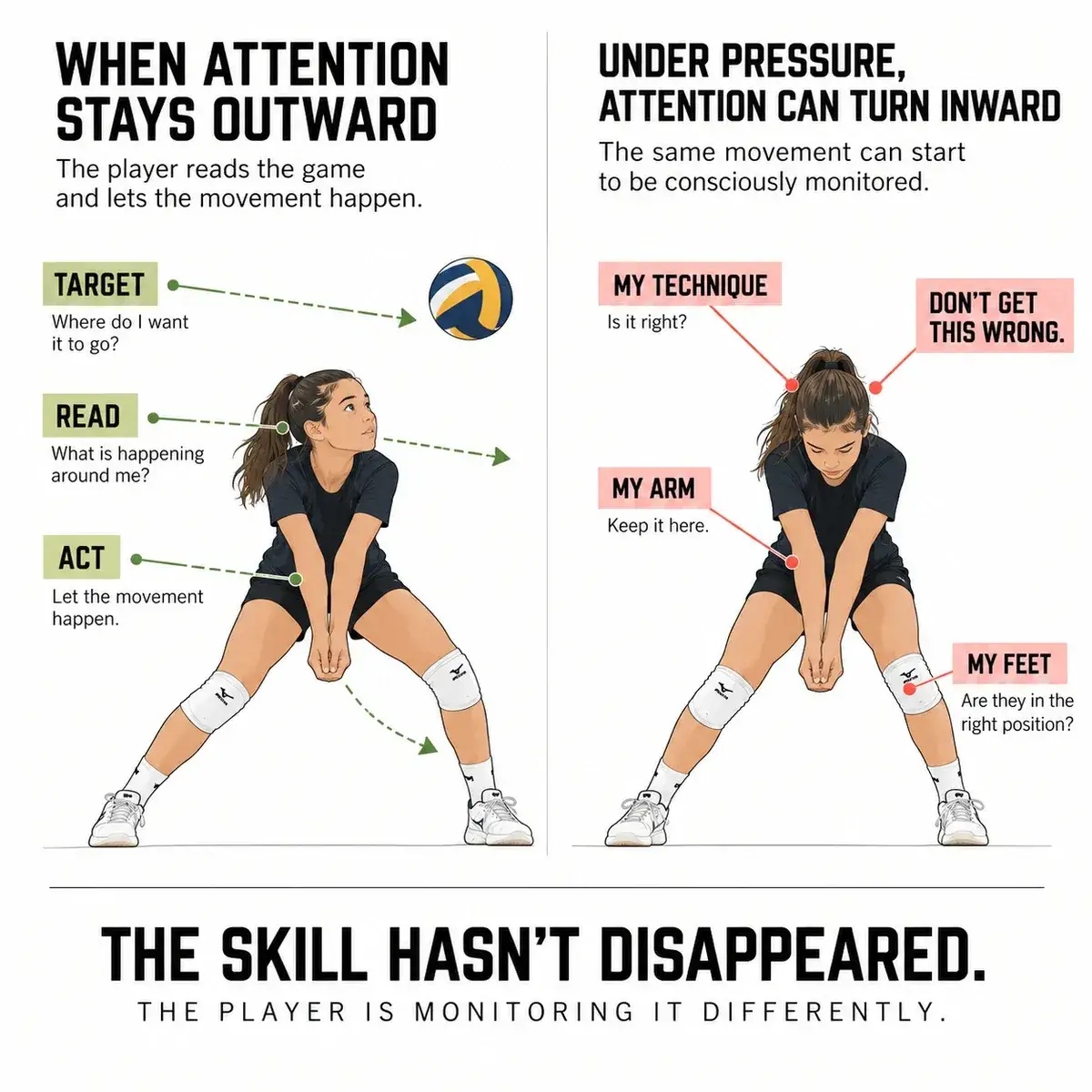
A player really wants to get something right, so they start thinking more about how they’re doing it.
Where should my foot go? Am I holding this correctly? What are my hands doing? Am I in the right position?
Thinking about technique isn’t a bad thing. It’s part of how players learn. But researchers have studied how, under some kinds of pressure, a movement a player already knows well can get pulled back under conscious control. For some players, that gets in the way of doing it smoothly.
Sometimes the player isn’t trying too little. They’re trying so hard to get it right that they stop doing it naturally.
04
The mistake affecting them might not have happened yet
Watch closely and you can sometimes see a player changing before anything has actually gone wrong. They take the safer option, hesitate, stop getting involved as much or don’t try the thing you watched them do all week in training.
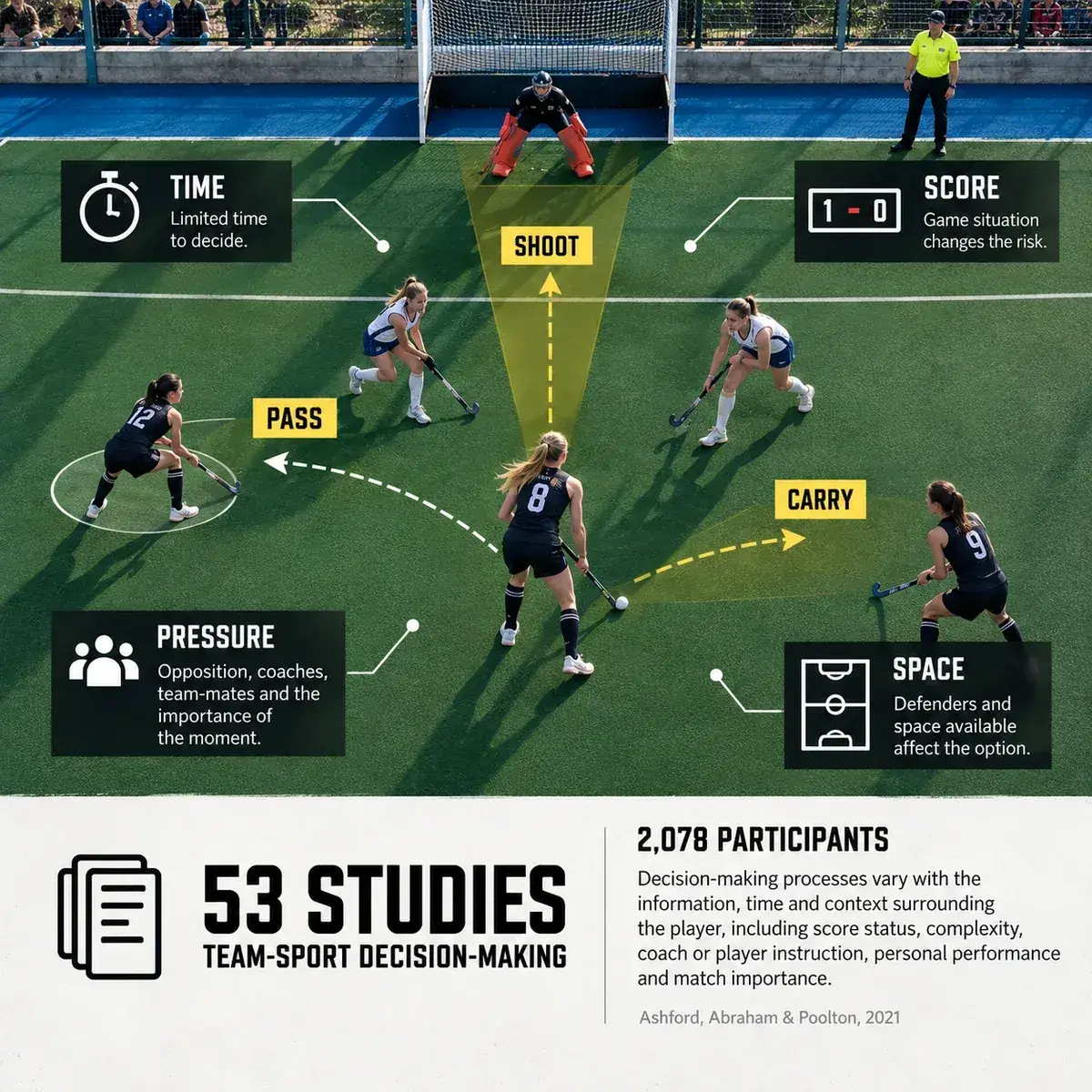
A review of 53 studies into decision-making in team sports (Ashford, Abraham and Poolton, 2021) found that decisions can change with things like the score, how important the match feels and what has already happened in the game.
That review was about decisions, not worry. But it fits something I see a lot. Pressure doesn’t only show up after something goes wrong.
A player might be thinking about missing the next shot, being taken off or what happens if they lose, and that can be enough to change what they do before anything has actually happened.
Sometimes they end up playing around a mistake that hasn’t happened yet.
05
One mistake can follow them into the next moment
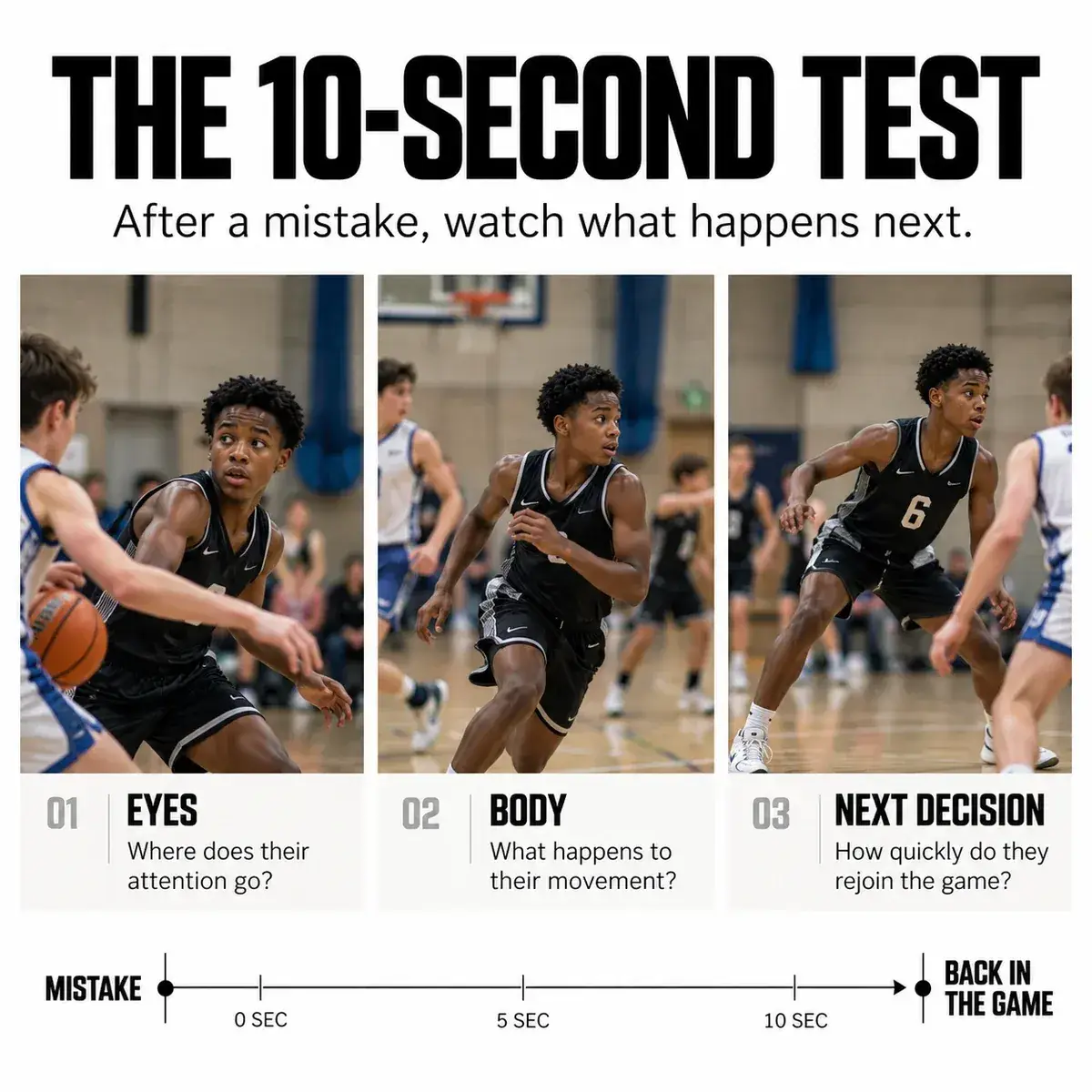
I tell parents not to just watch the mistake. Watch the next 10 seconds.
Do they look straight at the coach, drop their head, stop talking or avoid getting involved again? Or do they get themselves back into the game?
None of that tells you exactly what they’re thinking. But it can show you whether the effects of the mistake are carrying into what happens next.
Every player makes mistakes. That’s not the interesting bit. The interesting bit is what the mistake takes with it.
When this keeps happening, something else can start to change. A player knows what they can do in training, but if they keep struggling to show it when competition starts, they can begin to question their own ability.
Maybe I’m just not as good as I thought.
That’s why the response after a mistake matters. We’re not trying to create players who never get things wrong. We’re trying to stop one moment becoming the next five.
06
Playing well under pressure is something they can practise
Most training is built on repetition. Passing, shooting, serving, tackling and movement get repeated until they feel more natural.
But how often do players practise what to do when those same skills suddenly feel harder?
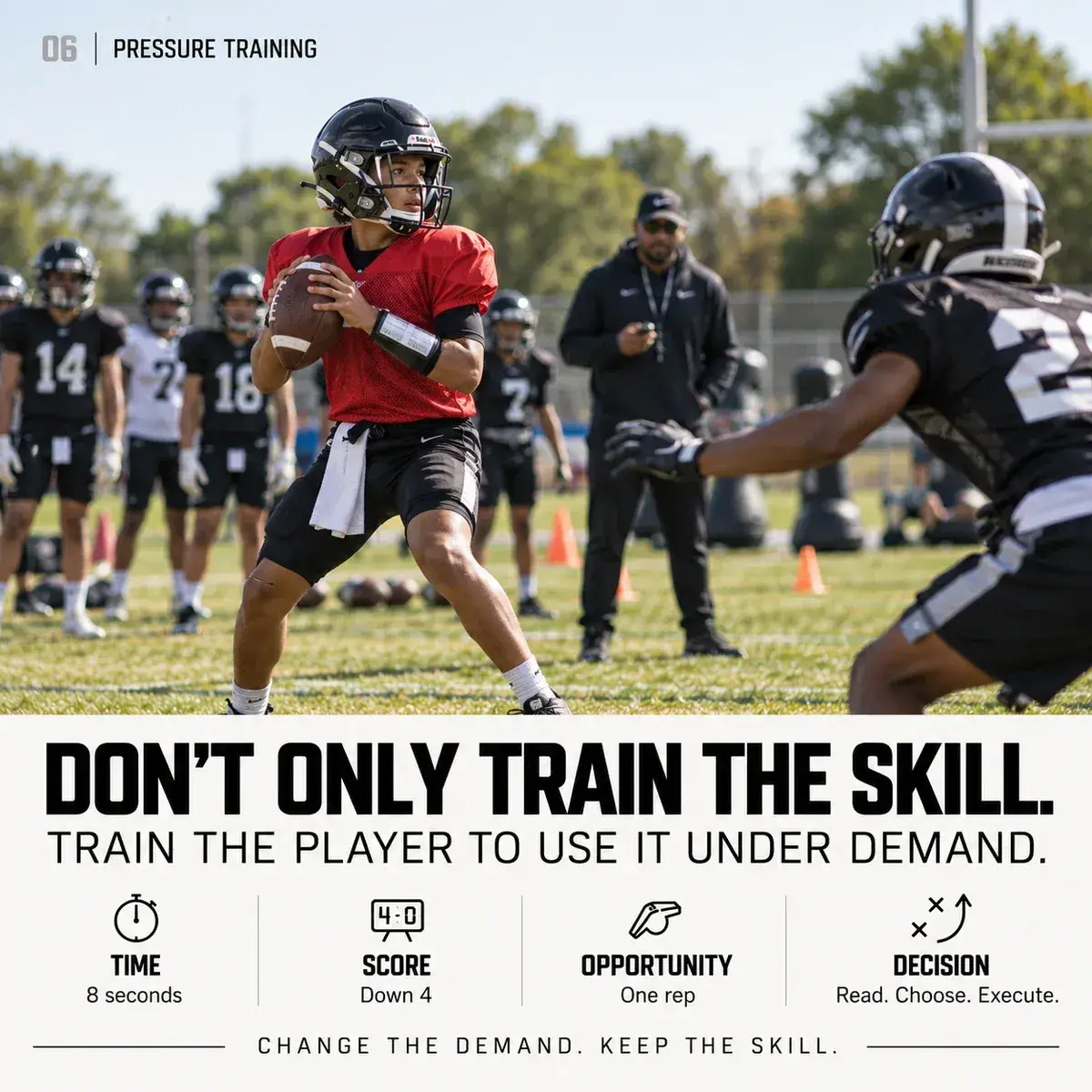
There’s actually a field of training built around this, usually called pressure training. Done properly, it isn’t about shouting at players or trying to make them stressed. It means safely adding some of the demands they may face in competition, so they get chances to practise dealing with them.
That might be a score to chase, fewer chances, a decision that matters or having to reset and go again. The research on it is still growing, and what helps can depend on the sport, the player and how it’s done.
If competition is where the pressure shows up, I think players need chances to practise dealing with some of that pressure before competition too.
07
Pressure gets harder when they don’t know what to do with it
Pressure itself isn’t always the enemy. Some of the best performances in sport happen when the game matters most.
The problem is that players can get years of coaching on what to do technically, then very little to work with when pressure changes what they’re thinking about.
So we say things like “relax”, “forget about it”, “be confident” or “just play your game”.
None of that is bad advice. But it tells the player how we’d like them to feel, without necessarily showing them what to do next.
And that’s the part I think we’ve been missing.
So what can a player actually do?
The answer doesn’t need to be complicated.
When pressure pulls a player away from the game, they need a way to get themselves back to what matters now.
At PlayerScout we teach a simple four-step sequence for this. We call it the Next Response Method.
NOTICE → RESET → REFOCUS → RESPOND
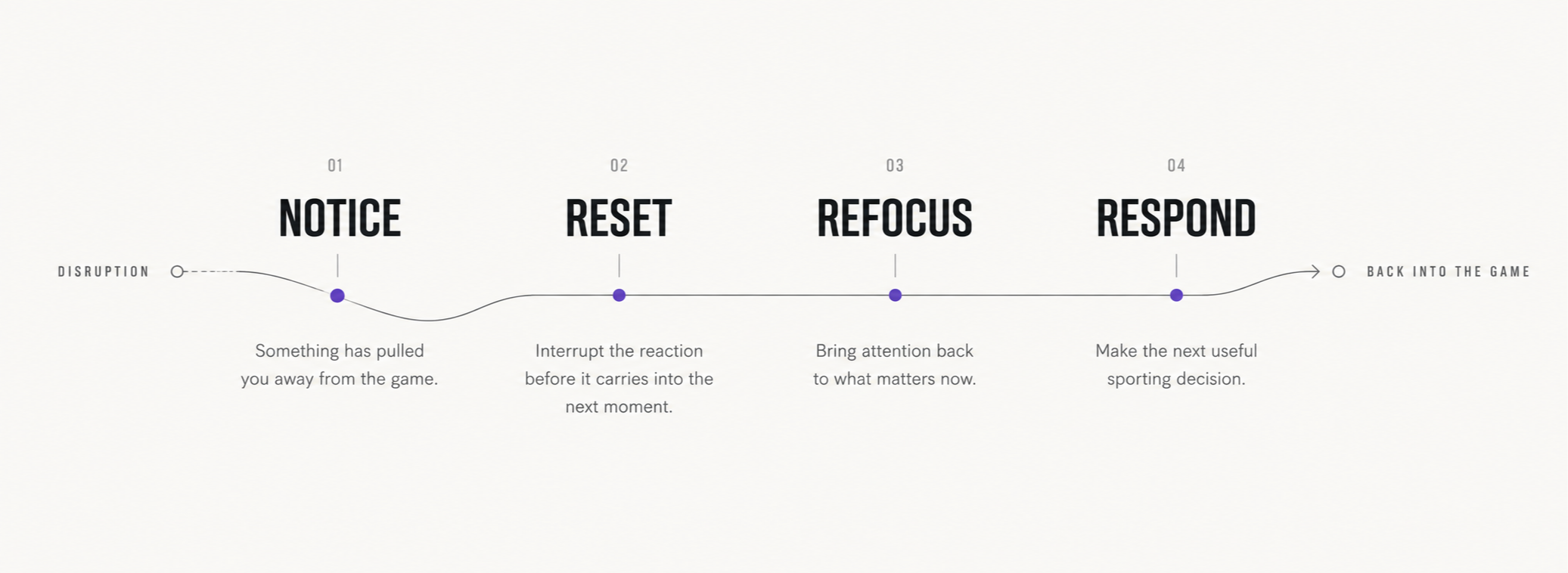
The goal isn’t to remove pressure. It’s to give the player a way back when it shows up.
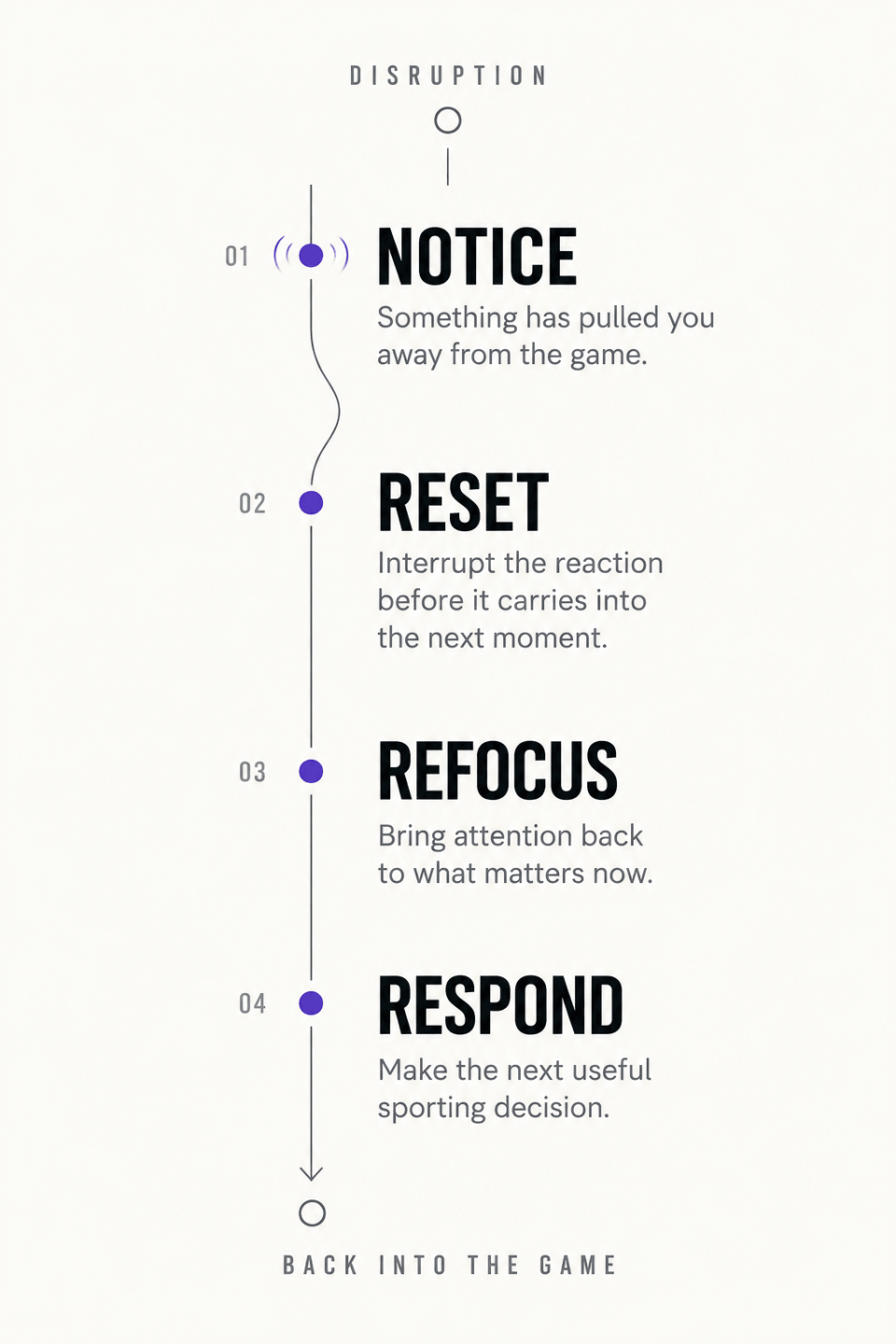
But resetting after a mistake is only one part of it
Think about everything else we expect young players to handle.
Nerves before competition. Pressure when the game matters. Feedback from a coach. A bad performance. A run of poor form.
We spend years helping players develop the physical and technical side of their sport.
But we often leave them to work out the mental side for themselves.
THE MENTAL SIDE
OF SPORT CAN
BE TRAINED TOO.
That doesn’t mean teaching players to never feel nervous or make mistakes.
It means helping them learn how to prepare for pressure, manage their attention, respond when things go wrong and deal with the result afterwards. These are all things players can work on.
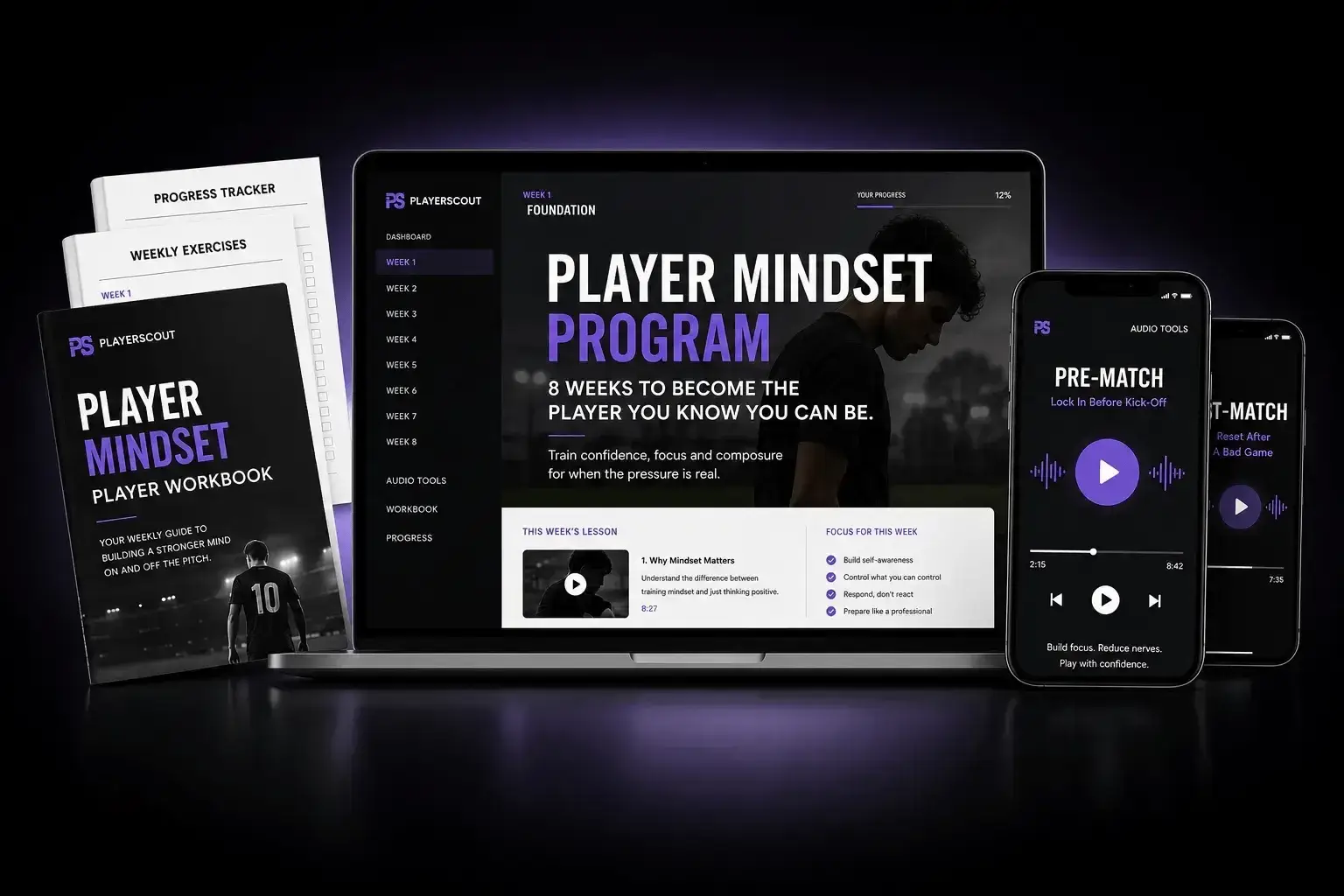
That thinking became a big part of why I built the Player Mindset Program. Over eight weeks, we give players practical things to work on around pressure, attention, mistakes, confidence and the situations that keep coming up in sport.
What parents are noticing
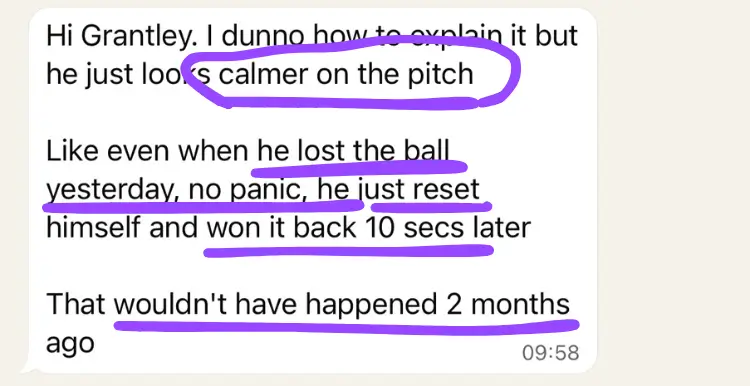
Claire
Parent of a 12-year-old football player
★★★★★
“Our son actually went from a disastrous routine where he left the event in tears, and was able to articulate to his coach what he needed in order to reset, refocus, and he went on to deliver an incredible routine. I don’t think he would have been able to have a comeback like that before this training.”
Jessica Stone
Parent of three competitive gymnasts
Review on Trustpilot, March 2026
12,000
Players Worked With
500,000+
Community Members
4.7/5
★★★★★ Trustpilot Rating
52
Countries
PLAYER MINDSET PROGRAM
TRAIN FOR WHAT COMPETITION CHANGES.
The Player Mindset Program gives players a structured way to practise the mental skills competition demands, including how they prepare for pressure and respond to mistakes.
✓Ages 8 to adult
✓Built for players in any sport
✓Short, practical mental training
See the full eight-week programme, what players receive and how it works.
★★★★★ 4.7/5 on Trustpilot.
Trusted by 12,000+ players and families.
DISCLAIMER: Our website provides readers with content for informational and educational purposes only and does not replace medical advice from qualified healthcare providers. You must always consult a qualified healthcare professional when undertaking fitness, training or nutritional programmes. All testimonials are specific to the individual players and individual results may vary.
© 2026 PlayerScout. All rights reserved.
PlayerScout® Player Mindset Program
Eight weeks of practical mental training.